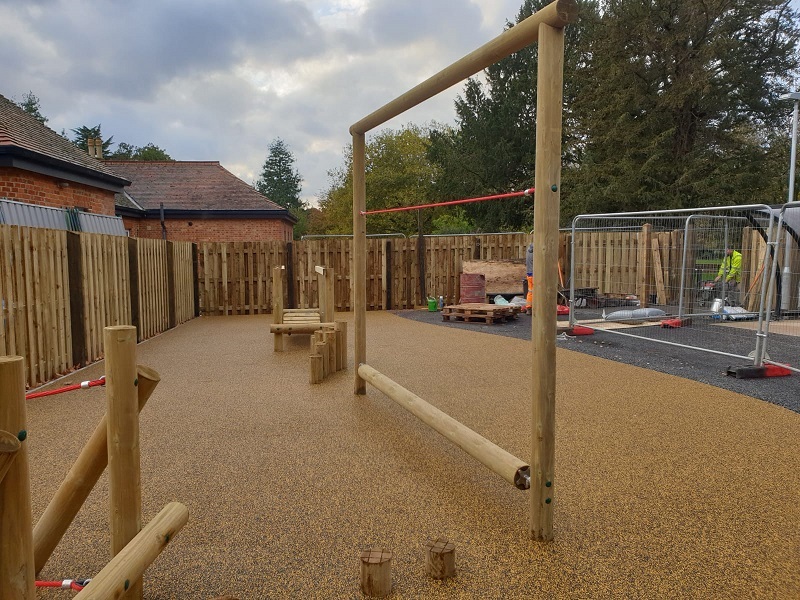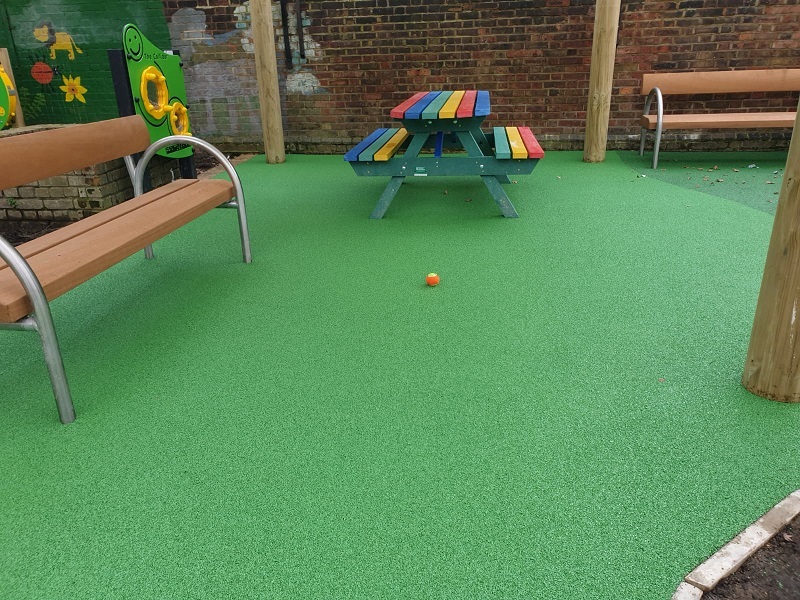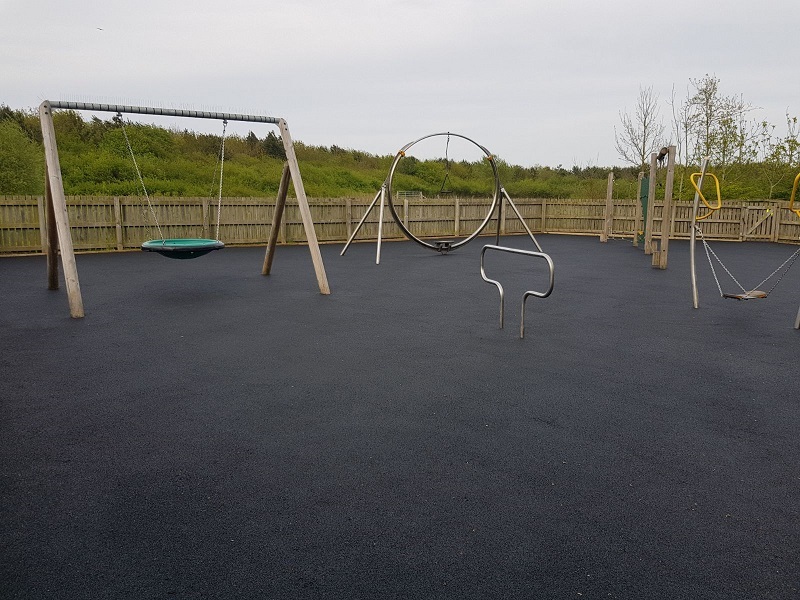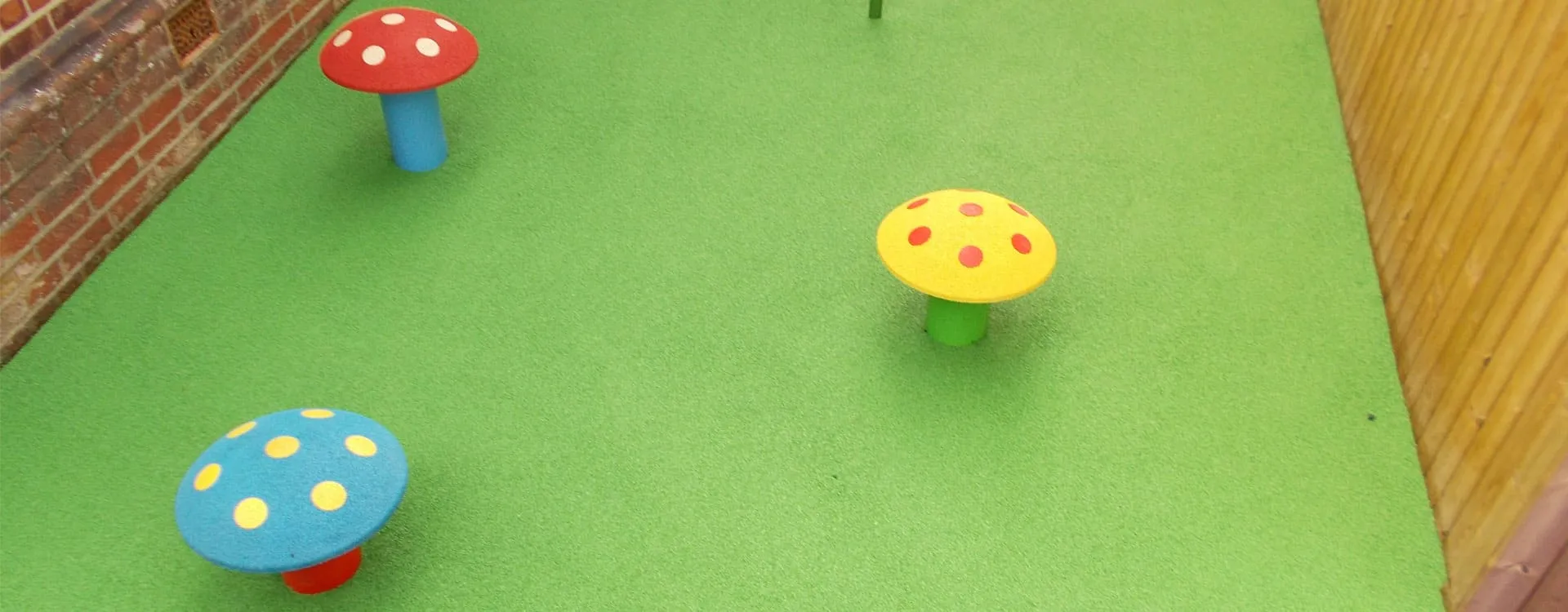
Outdoor play can be fun by itself but sometimes it can become stale and uninteresting if its repeated to often. This blog will explore some common ideas which you can apply to your playground to make it more interesting and engaging.
You can find plenty of outdoor play area ideas for kids here and see which equipment and features you might want to install.
School Playground Design Ideas
Coming up with the school playground design ideas can be tough work. People make it seem easier than it is but it can end up being difficult to do it by yourself. Picking the surfacing can be confusing as you may not know the difference between rubber mulch and wet pour, equipment can seem really overwhelming and even if you pick all of this, you’re still not guaranteed that the kids will enjoy it.
We at Soft Surfaces can help you understand more about the whole process and give you some of the best recommendations and advice the industry can offer. Over 20 years of experience makes us one of the most knowledgeable when it comes to these types of jobs.
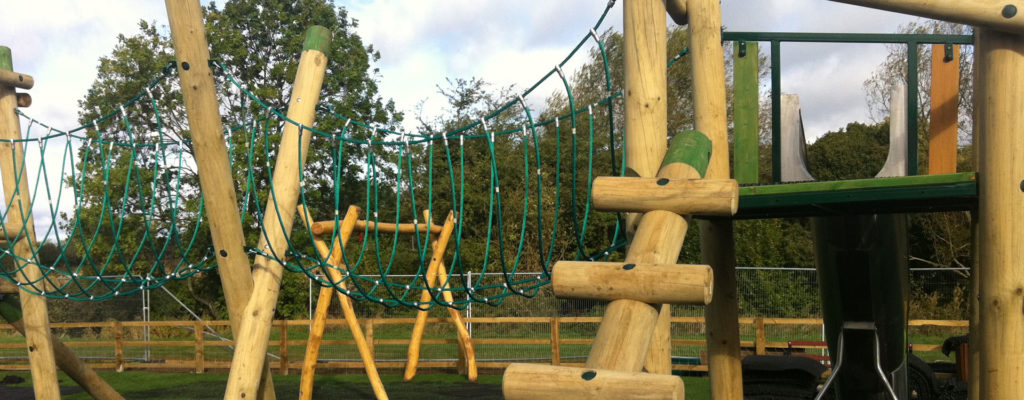
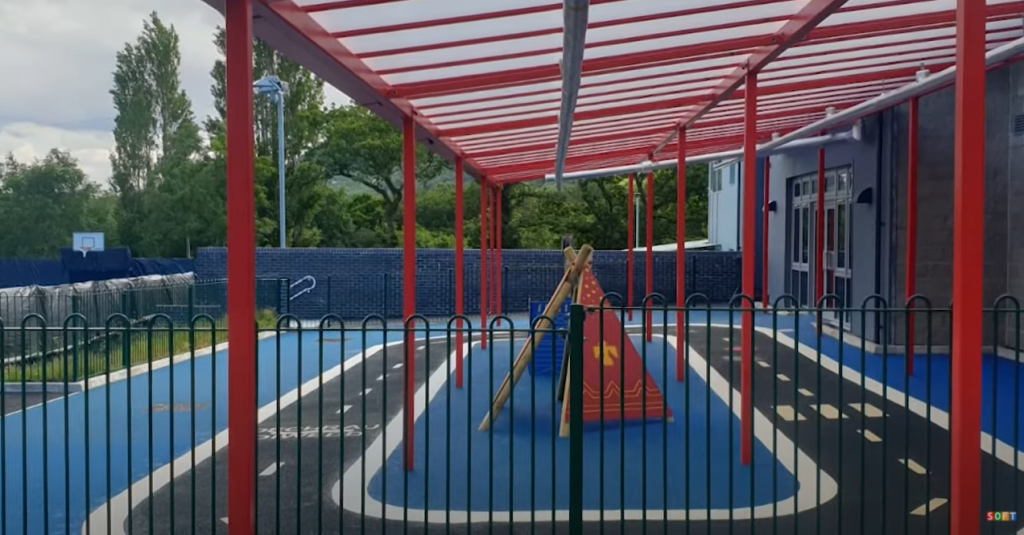
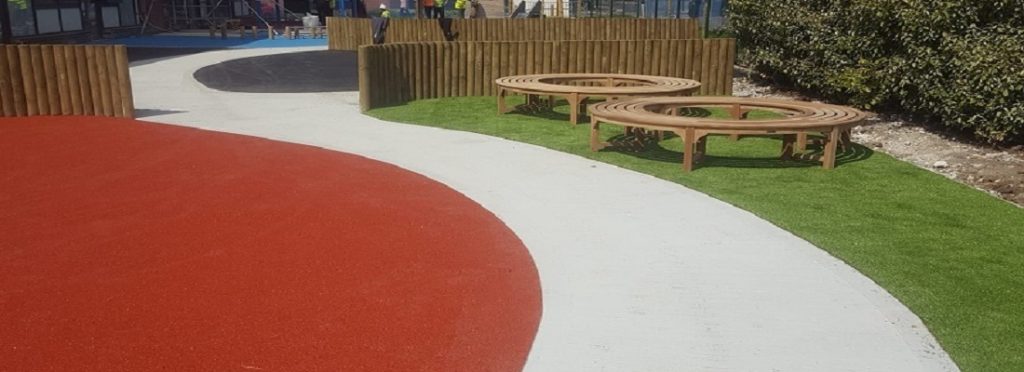
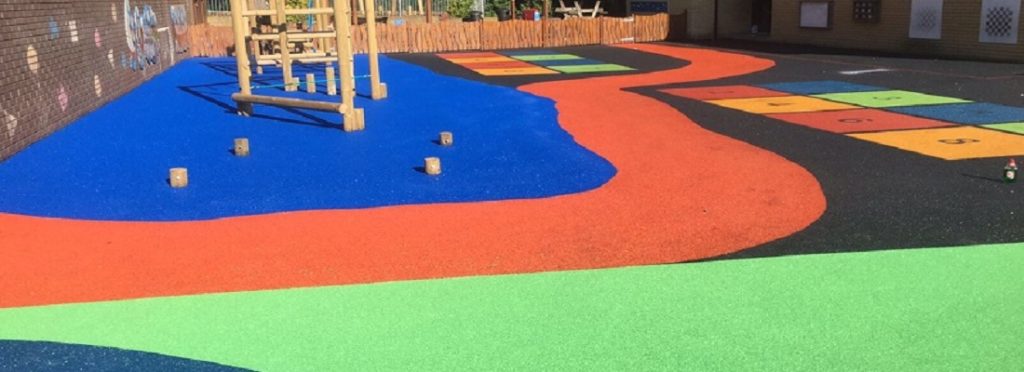
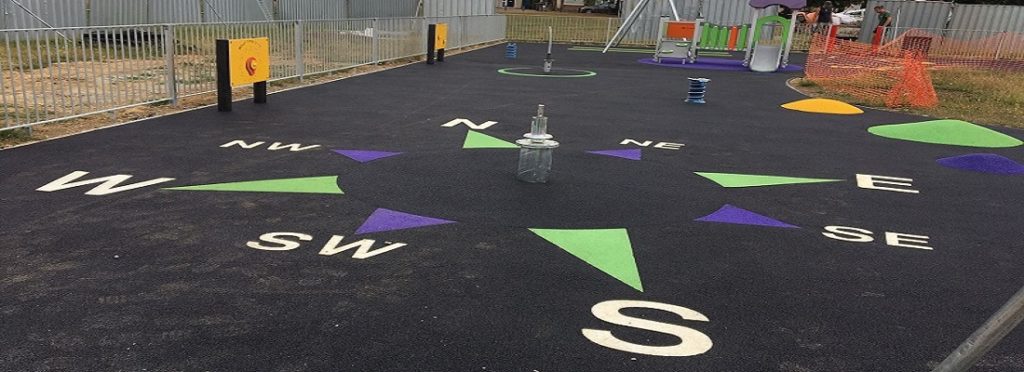
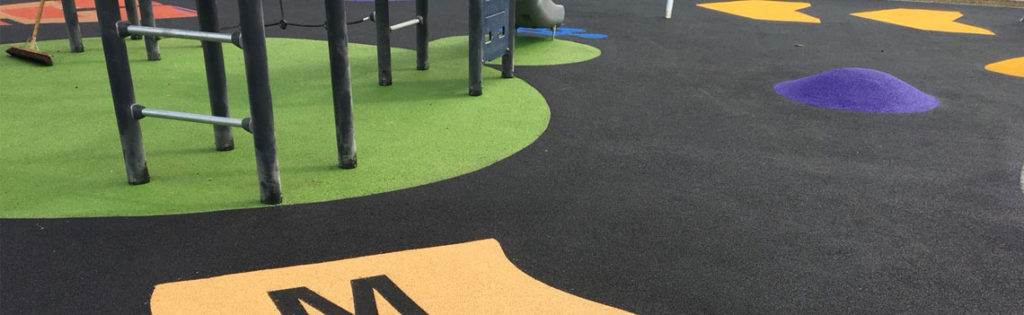
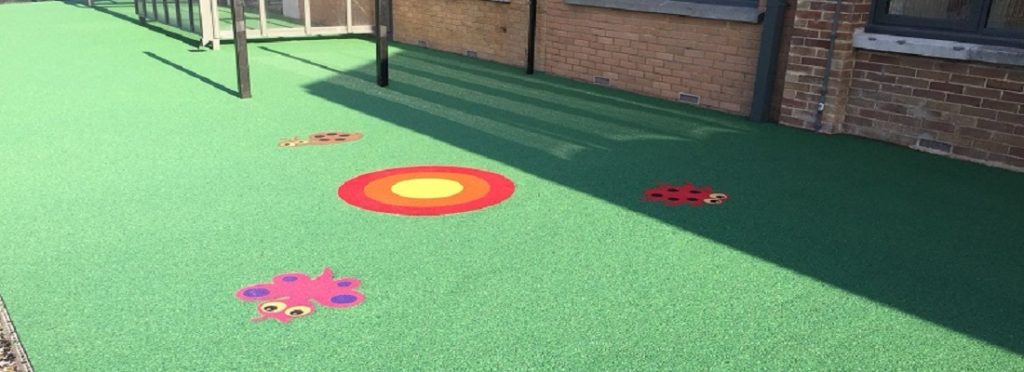
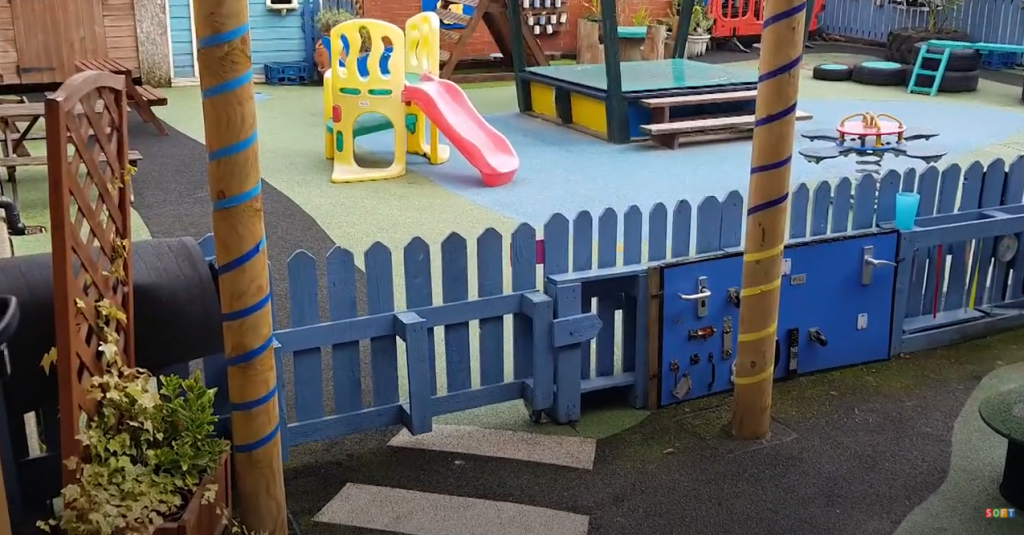
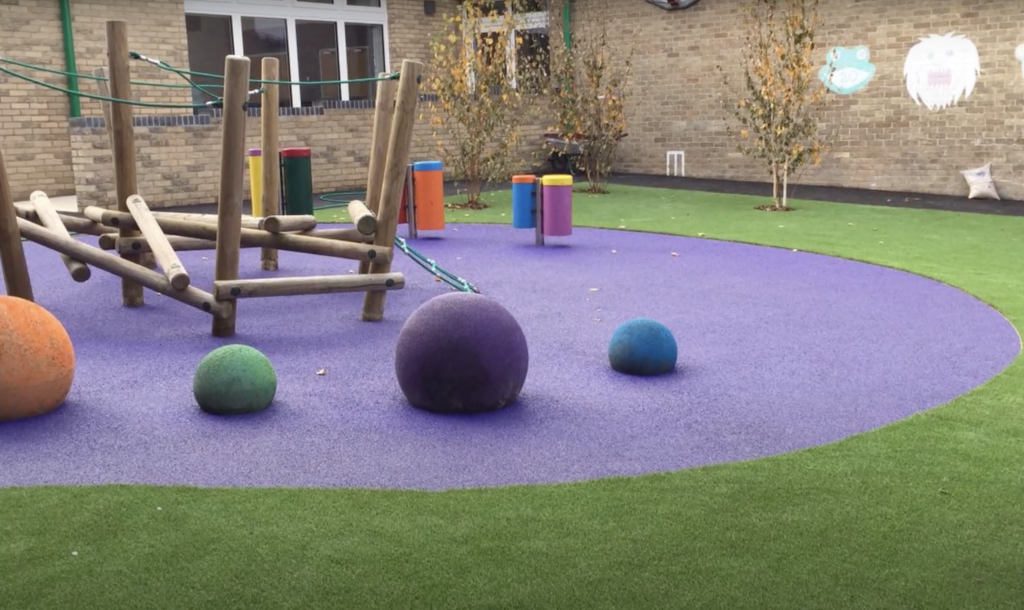
A recommendation we offer is creating a playground that is built from different things. Through this design, you’ll be gaining the attention of pupils using it and allowing them to learn more about the world and what different things are on it. Or, you could make it bright and full of unique patterns. Doing this also has the same effect of gaining attention but proceeds to trigger their imaginations.
Have a look at this post to find out more about wetpour graphics for nurseries.
Play Area Activities for Children
Creating play area activities for children to take part in on the playground can really get them a lot more active and interested with it. Vibrant and colourful playgrounds can make pupils engaged a lot quicker and mixing them with activities can make the play area even more interesting. Activities can include:
- Old-fashioned games – Thermoplastic markings in schools can make games like ‘What’s the time Mr Wolf’ a lot more interesting and popular than just other regular games. It can also help keep people entertained whilst they wait for equipment to be free so it’s a brilliant way to keep kids from complaining about being bored.
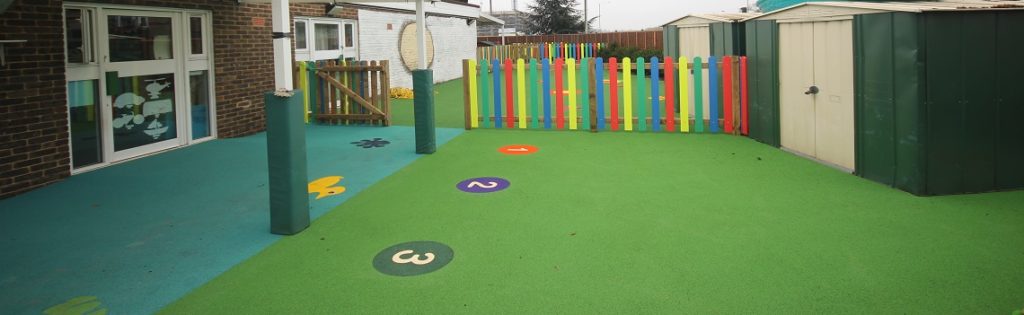
- Target games – Creating a target somewhere in the area will allow for the creation of games amongst the pupils. Ranging from who can hit the bullseye to who can jump the furthest, this type of graphic can really get engagement and interest.
- Be creative – Let the kids have full control over what the activity is and let them create it. Provide the tools and necessary equipment to them and let them go wild! Pupils will start to feel free to do what they want and through that, they become truly creative.
Simple yet effective, these activities are just a few outdoor play area ideas for kids that you could put into action in your playground to get full engagement from the users. Whether it is one of the old-fashioned classic games or more modern adapted games, creating activities like the ones listed above can really help create a brilliant atmosphere amongst the play area.
Types of Equipment for a Nursery Playground
Children in nursery aren’t as energetic as kids in primary school, however, they are a lot more curious and explorative in nature. Key pieces of equipment are things that capitalise on these traits and try to interest whilst teach kids new things about the world around them. Some more popular types of equipment for a nursery playground include:
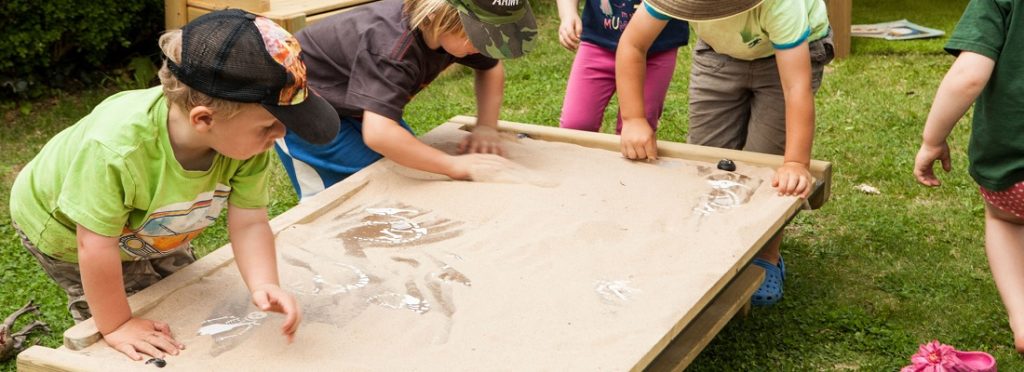
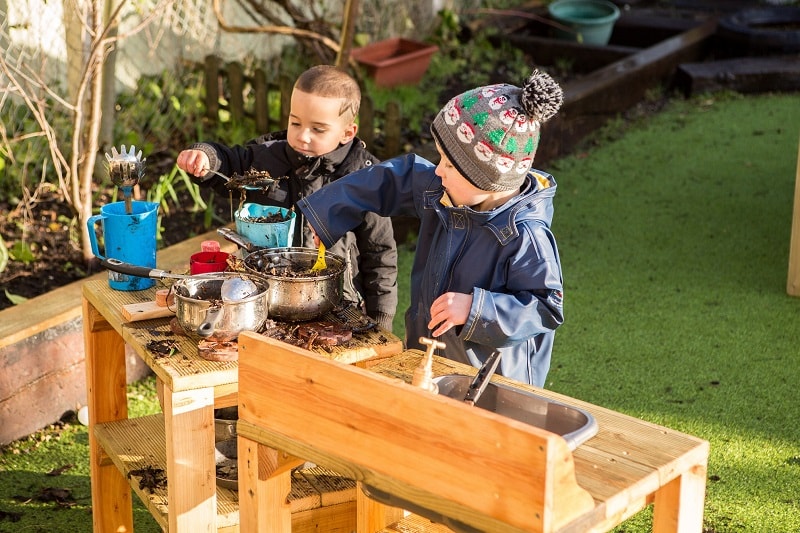
- Sandpits and water tables – Due to the properties of both substances, kids absolutely love interacting with these pieces of equipment as it captures their imagination and creativity. Sandpits allow for teamwork and social activities to occur as kids start to build houses and other such things for playing with. Water tables get children thinking about how things work and introduce them to different states of matter.
- Sensory stations – At this point in time, all five senses are experiencing new things and surroundings which slowly helps children build a better knowledge of the world around them. Sensory stations are made up of different musical instruments, materials, patterns and such to give kids a chance to explore new things and really learn more about their environments.
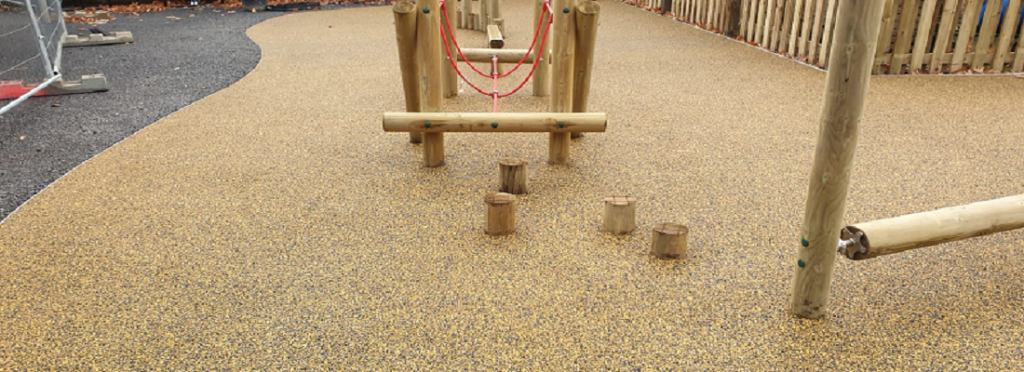
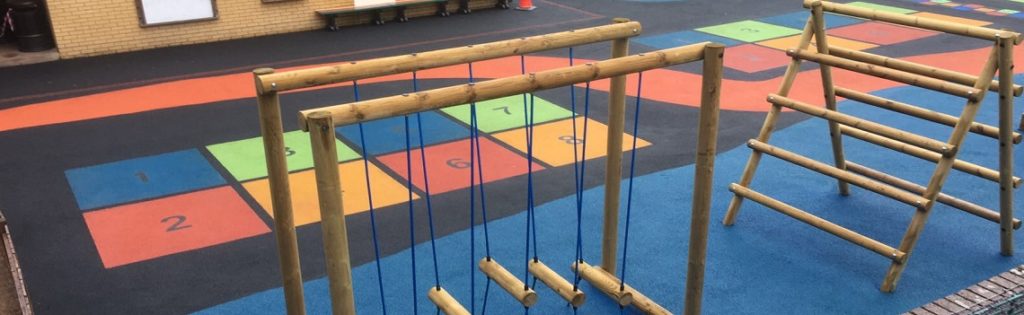
- Obstacle courses – Many may think of obstacle courses as being physically intensive, but this isn’t always the case. Obstacle courses can be made to be more explorative and get kids imagining that they are on some wild adventure through the Amazon or anything they want. Linking to the previous point, by creating the course out of a wide range of different materials; kids will become a lot more imaginative and therefore will feel a lot more enticed to explore around the course and try to complete it.
- Outdoor rooms – Sounds a bit weird but by creating an outdoor kitchen, office or shop can really get kids thinking. Role-playing is a huge part of a child’s growing up and it helps them build a solid understanding of the society we live in. Encouraging them to create relationships and communicate, role-playing should be highly encouraged throughout schools and this type of equipment is a great method.
- Stages and platforms – These are perfect for expressive arts playgrounds as they give kids the option to put on their own plays and performances.
Pieces of equipment like these are a great way to get kids to explore the world and get a better understanding of how everything works, whilst not being boring or tiring. At this point, pupils learn the best through play as they can enjoy it whilst seeing the application of the subject/topic they are being taught in real life.
Have a look at this video below which shows our team installing a wetpour play surface and graphics at a primary school.
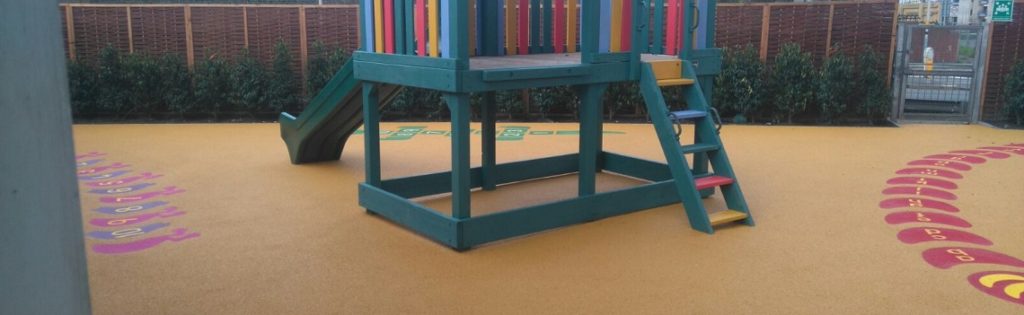
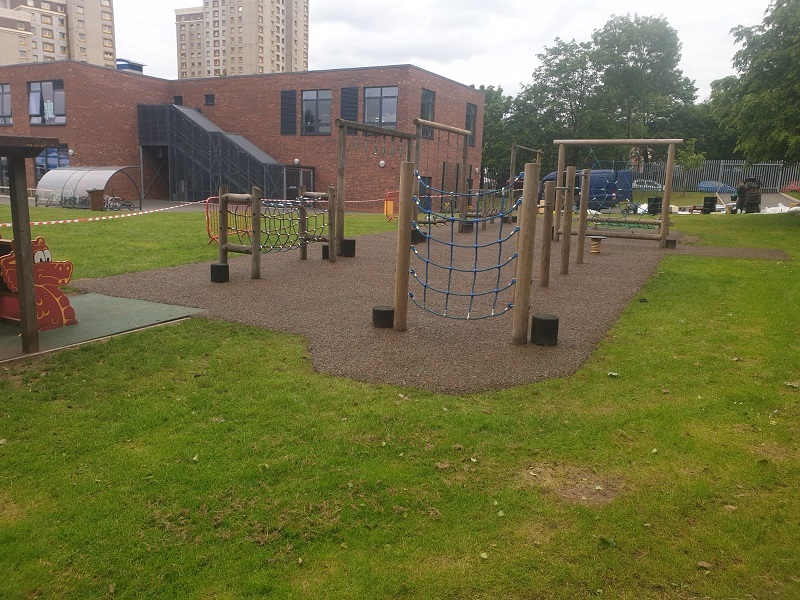
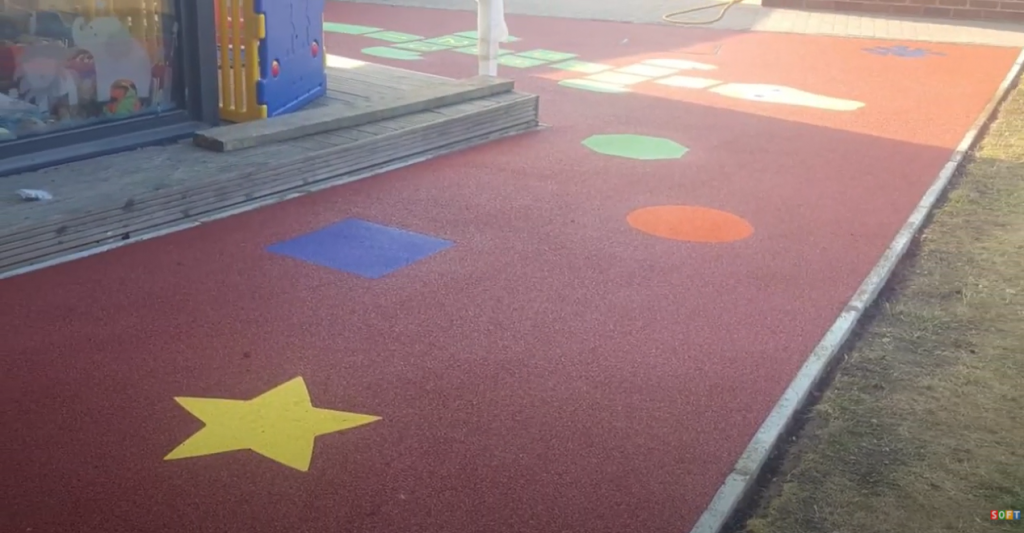
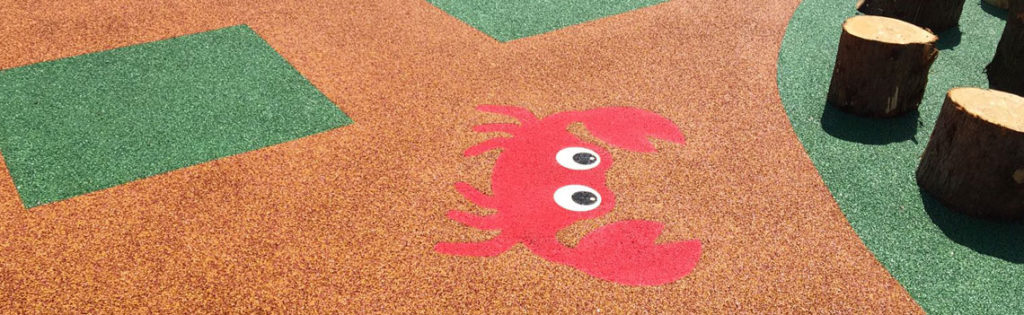
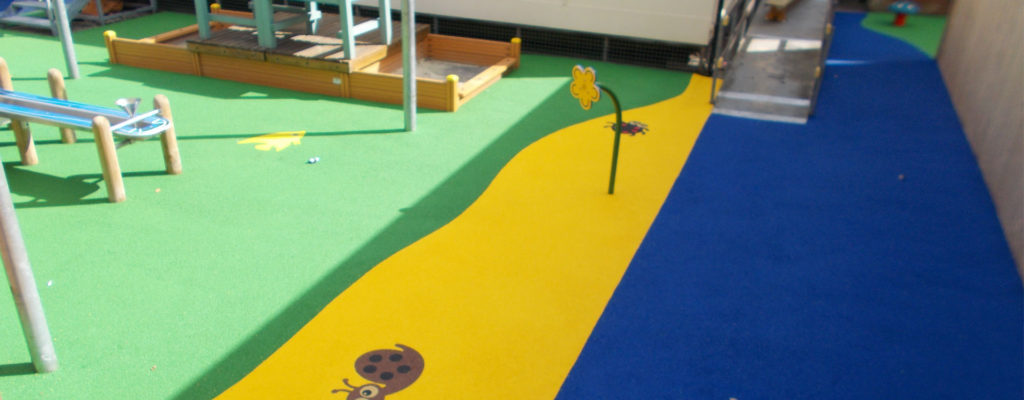
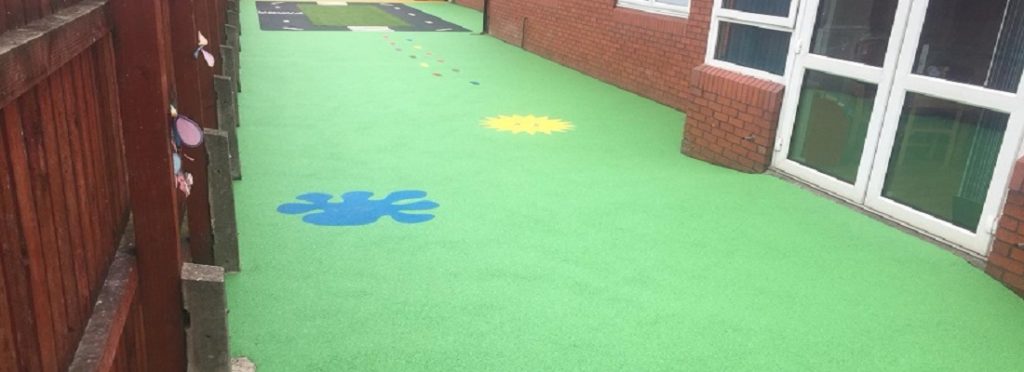
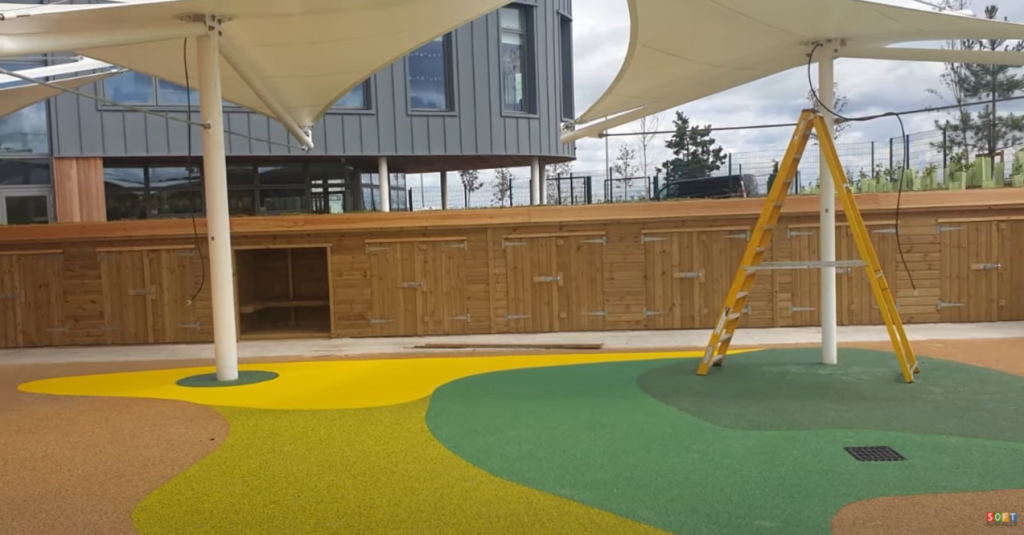
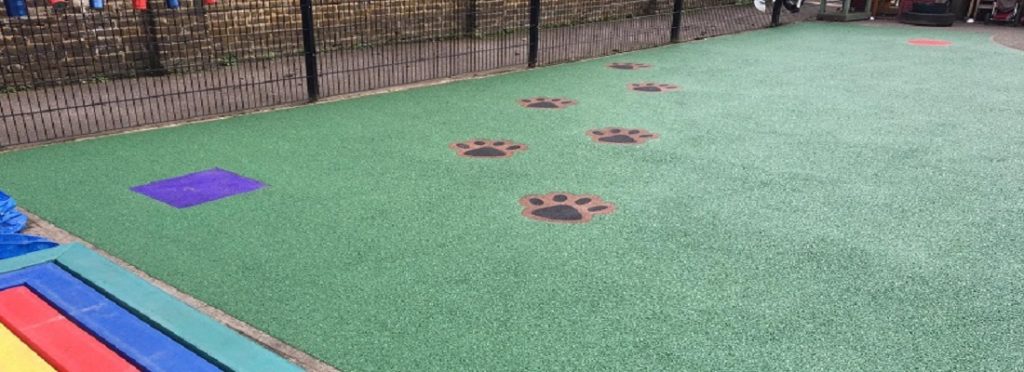
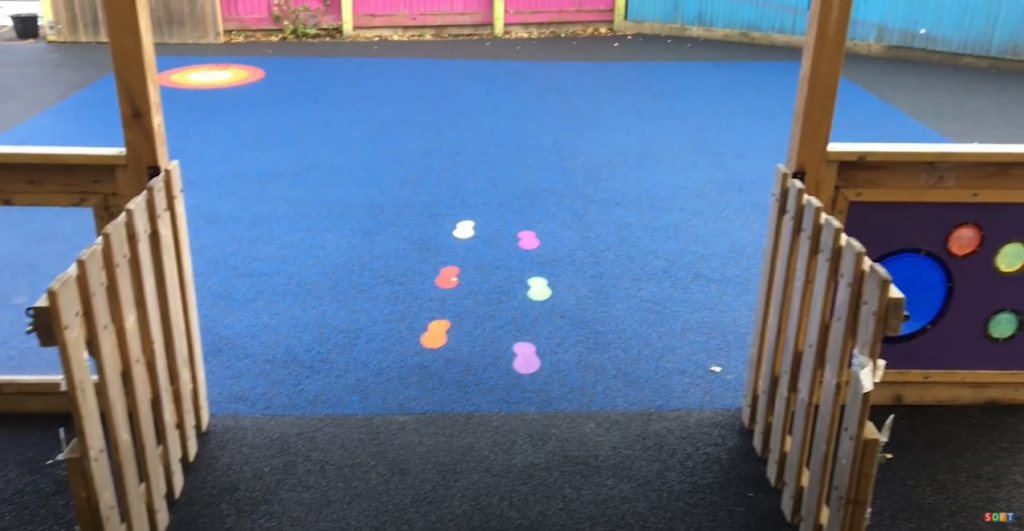
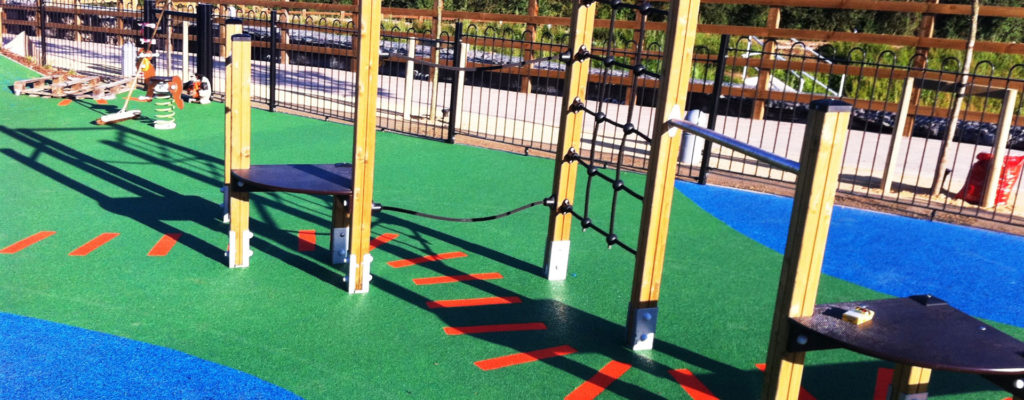
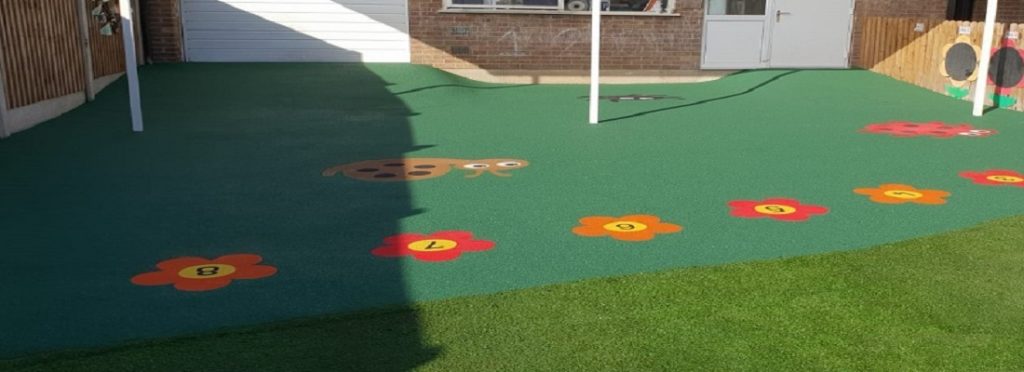
This particular design involved a green wetpour background with different shapes including footsteps, a sun and splats. We also installed the wetpour safety surface around some timber equipment to help enhance the safety.
Garden Play Area Ideas
Encouraging kids to get involved with gardening is a brilliant idea as you can teach them a wide number of things ranging from patience to responsibility. There are loads of outdoor play area ideas for kids which can still apply to domestic gardens at home. Some may find it boring as it involves a huge amount of repetition, although there’re ways to make it more interesting for those kids through simple activities.
Building dens is another good activity which children can do using a variety of different equipment. Have a look at some of our den making ideas to find out more about what you can do.
Insect hunts introduce pupils to something incredibly interesting. Teach them about insects and everything about them and then give groups certain insects to find in the garden. Letting kids discover these insects for themselves creates a stronger idea of how there are other creatures that inhabit the earth and how they should be treated fairly and right.
Nature trails link incredibly well to the previous points and can be great as part of play area ideas. Take the class for a walk around the playground and explain to them more about the plants, creatures and equipment they encounter. Giving them a physical example really solidifies the point/information you are giving to them and may spark a strong interest in gardening. Maybe get them involved by helping with the gardening, improving organisation skills. Offering these activities in nursery can help improve school readiness for children and make them feel more prepared.
What should you put down in a kids' outdoor play area?
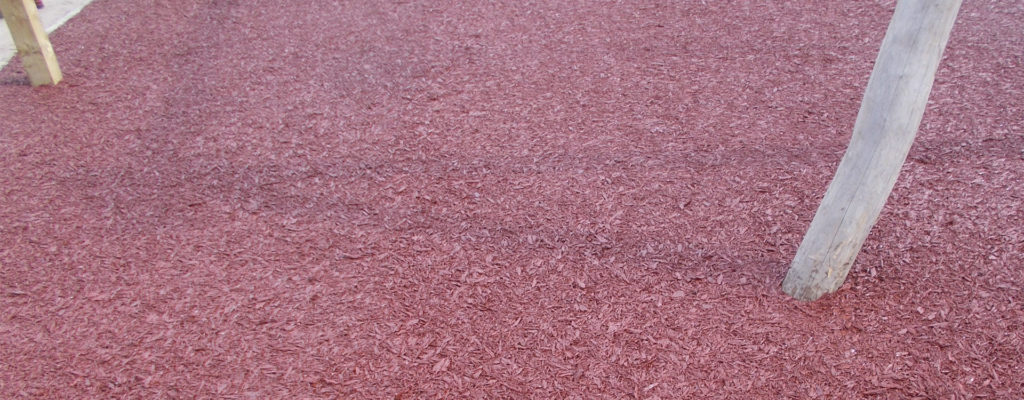
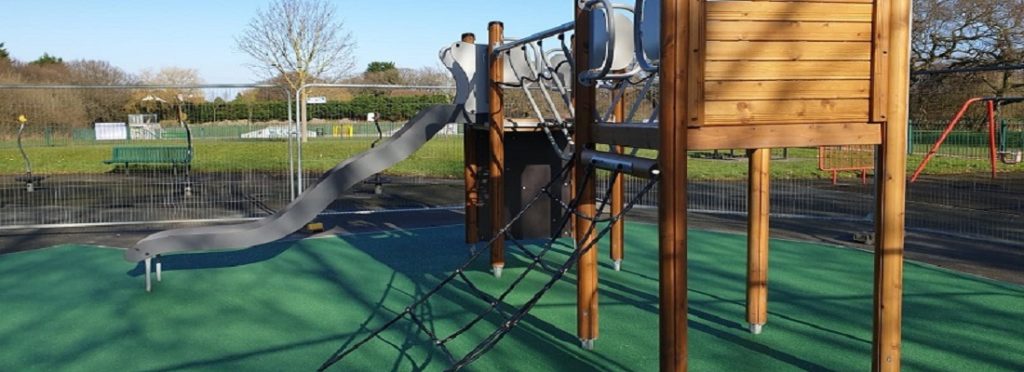
The best things to put down in a kids' outdoor play area are impact-absorbing surfaces such as wetpour rubber, bonded rubber mulch, play grass or rubber grass mats, because each is tested to BS EN 1177 to cushion a fall from the play equipment above it, unlike bare tarmac, concrete or hard-packed soil.
| Play area surface | Indicative cost | Best for |
|---|---|---|
| Wetpour rubber | £29 to £39 per m², excluding base works | Under climbing frames, colourful graphics, nurseries |
| Bonded rubber mulch | Around £55 per m² | Natural bark look, tree roots and slopes |
| Play grass | Priced per site | Soft lawn feel for lower-risk areas |
| Rubber grass mats | Priced per site | Low-cost cover under swings and low equipment |
Costs are indicative figures to confirm at survey, not fixed prices. The depth of each surface, and so its cost, is set by the Critical Fall Height of the equipment it sits under.
How do you make a children's outdoor play area?
You make a children's outdoor play area in five steps: decide the age group and play value you want, plan zones for active, quiet and creative play, choose the equipment, lay an impact-absorbing surface rated for the equipment's fall height, and then add markings, planting and seating to finish the space.
- Age and numbers: toddlers need low, enclosed equipment, while older children want climbing, balance and ball games.
- Zones: keep running games away from quiet corners, sandpits and mud kitchens so that each kind of play has room.
- Equipment: choose pieces for climbing, balance, swinging and imaginative play. Our guide to playground equipment for schools covers the main types.
- Surfacing: lay safety surfacing to the right depth under and around every piece of equipment.
- Finishing touches: add markings, shade, planting and seating for adults.
What are good outdoor play ideas for EYFS and nursery children?
Good outdoor play ideas for EYFS and nursery children are mud kitchens, den building, sand and water play, sensory gardens, role-play areas and low balance trails, because they build the curiosity, language and physical skills that the Early Years Foundation Stage asks settings to support through outdoor learning.
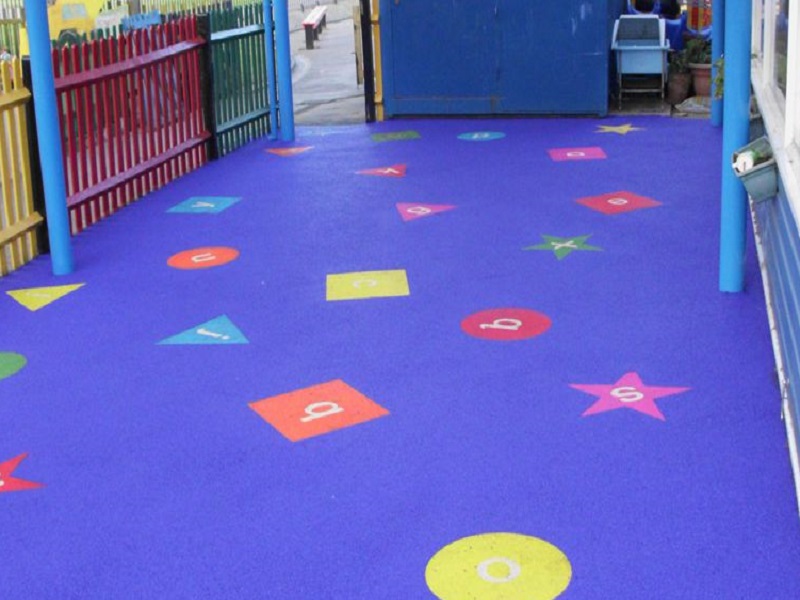
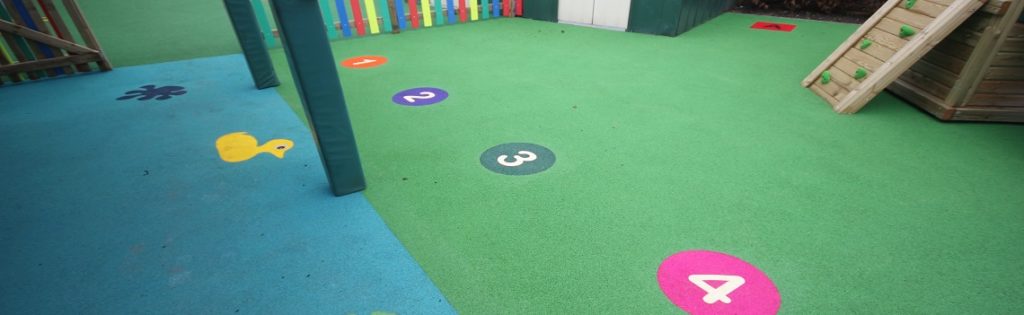
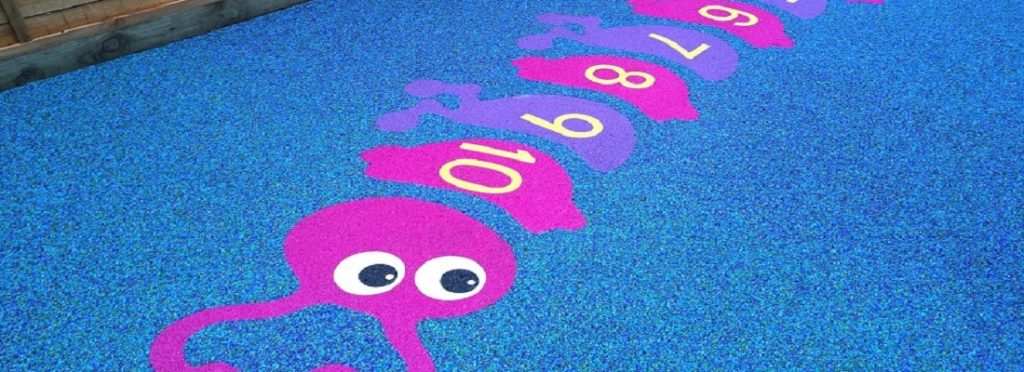
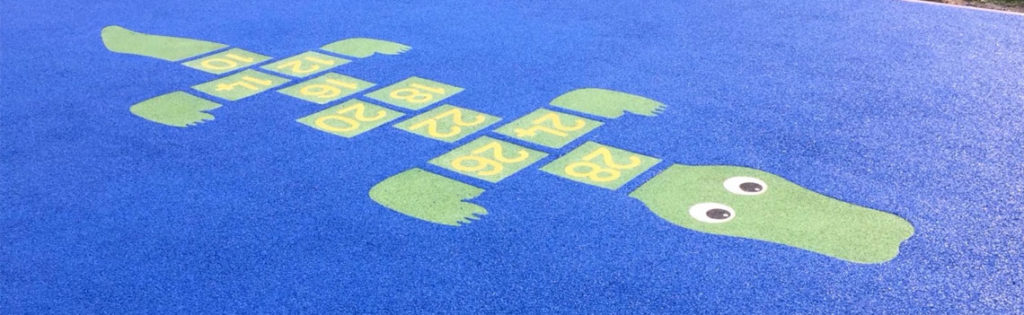
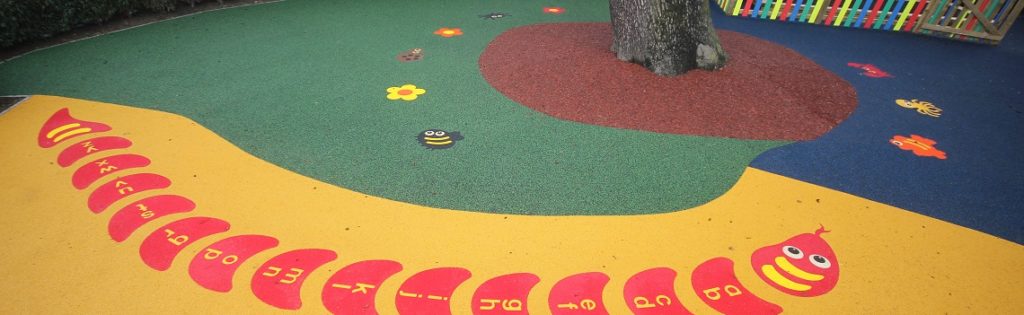
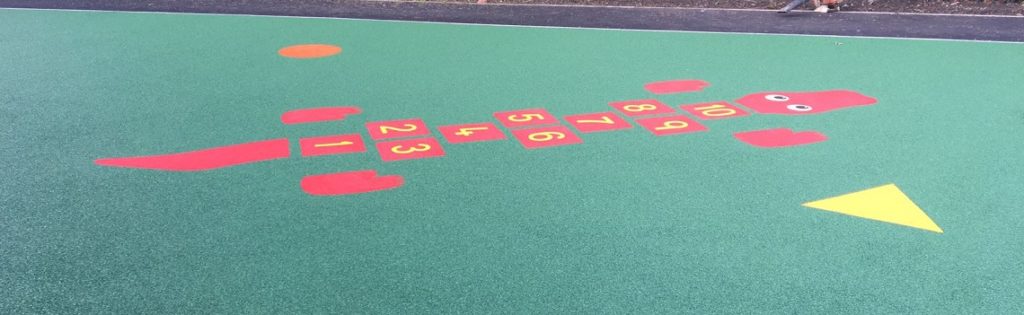
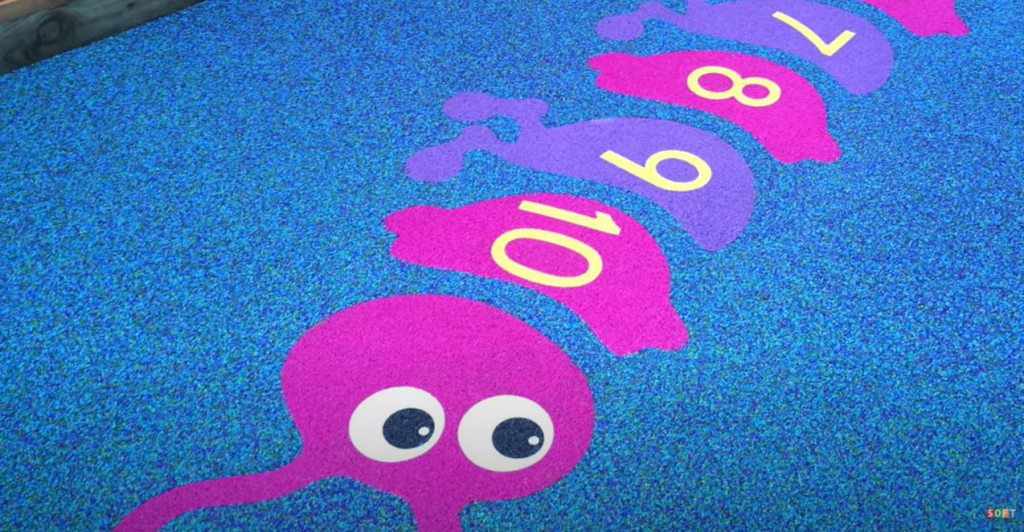
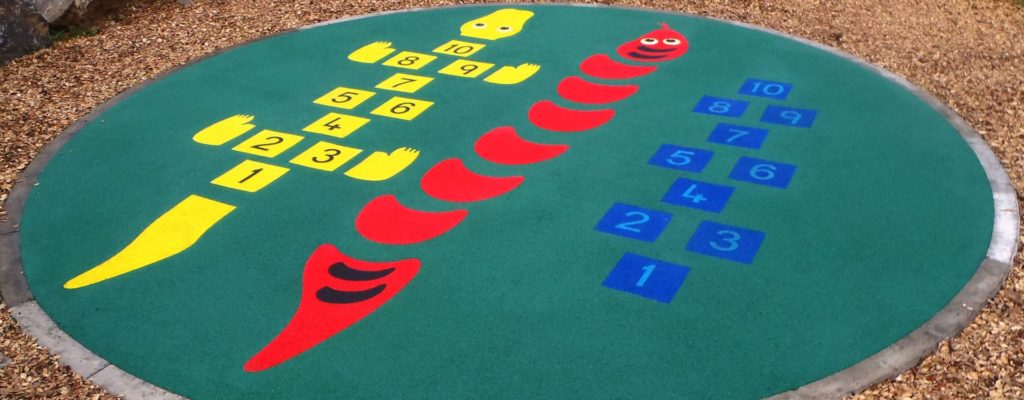
A soft, continuous wetpour surface with number and alphabet graphics turns the ground itself into a learning space for this age group. For more ideas, see the benefits of a mud kitchen, our den building ideas, sensory playground designs and our guide to nursery play area surfacing. The research behind this is set out in our guide to learning through play theories.
What are cheap playground ideas for schools?
Cheap playground ideas for schools include thermoplastic playground markings, painted games and trails, a storytelling corner, loose parts play with crates and tyres, and zoning the playground for different games, because each one adds play value without the cost of new fixed equipment.
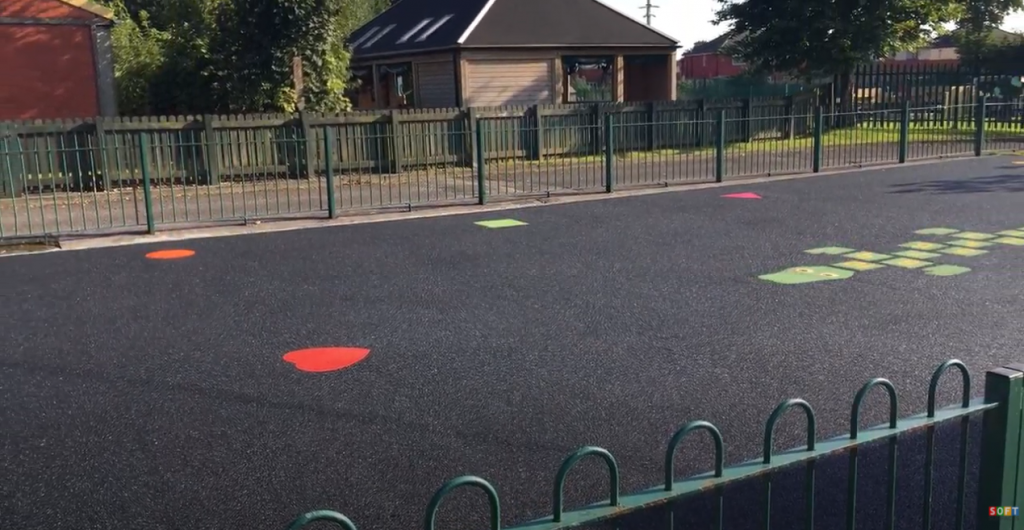
Thermoplastic markings are one of the lowest-cost ways to transform a tarmac playground, with hopscotch, number snakes, maps and sports courts laid straight onto the existing surface. See our school playground marking designs, how to create a storytelling area in your playground, and more school playground ideas.
How do you make an outdoor play area inclusive?
You make an outdoor play area inclusive by giving it a smooth, continuous surface that wheelchairs and walking frames can cross, choosing equipment that children of different abilities can use together, and adding sensory features and quiet spaces for children who find busy playgrounds overwhelming.
Wetpour and play grass give level, step-free access where bark and gravel do not. There are more ideas in our guides to inclusive playground equipment, SEN playground equipment and playground designs for sensory processing disorder.
How do you keep an outdoor play area safe?
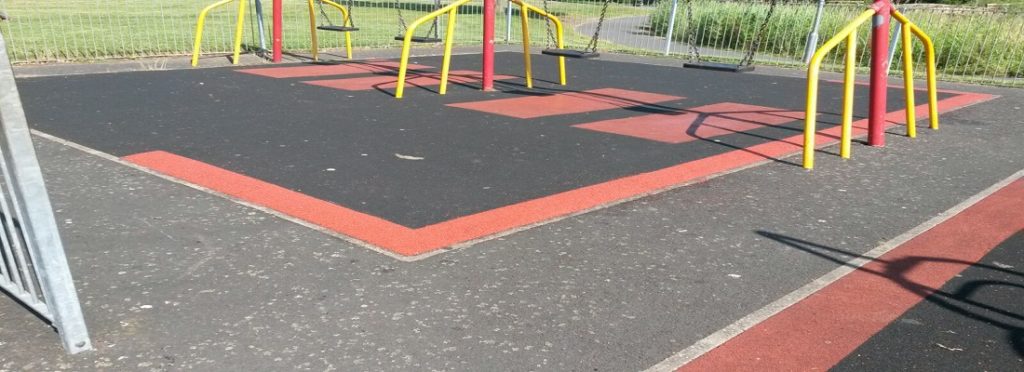
You keep an outdoor play area safe by installing equipment to BS EN 1176, laying safety surfacing tested to BS EN 1177 for each piece's Critical Fall Height, and carrying out regular visual checks plus an annual inspection by a qualified playground inspector.
Most playground injuries come from falls, so the surface under the equipment matters as much as the equipment itself. Our page on Critical Fall Height explains how the depth of surfacing is set, and our play area maintenance service keeps surfaces in good repair.
How much does a school play area cost?
A school play area costs from around £2,000 to £2,500 for an average piece of school playground equipment, plus safety surfacing from around £29 to £39 per square metre for wetpour, excluding base works. These are indicative figures to confirm at survey, because the area, equipment and groundworks change the total.
Many schools fund new play areas through grants, fundraising or their parent-teacher association. Our guide on how to apply for grant funding for a play area explains the main sources, and our playground surfacing page compares surface costs in more detail.
 4 Ideas for Teaching Organisation on the Playground
 4 Reasons Why Schools Have Artificial Grass
 Activities to Teach Kindness on the Playground
 Artificial Grass and Rubber Mulch Surfacing in Derby, Derbyshire
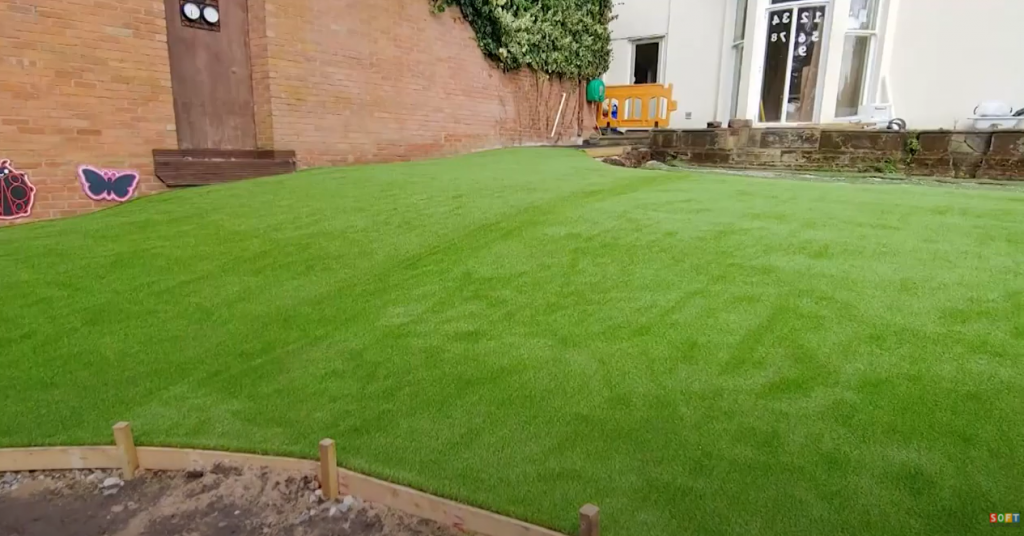 Artificial Grass and Wetpour Pathway Installation at a School in Birmingham
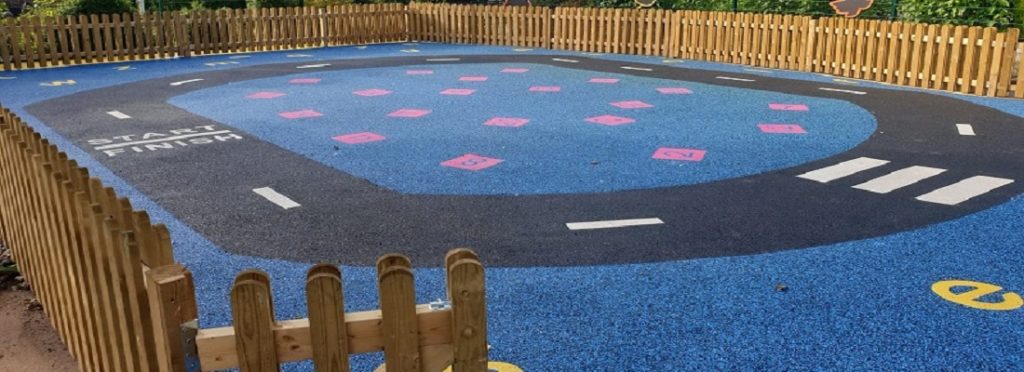
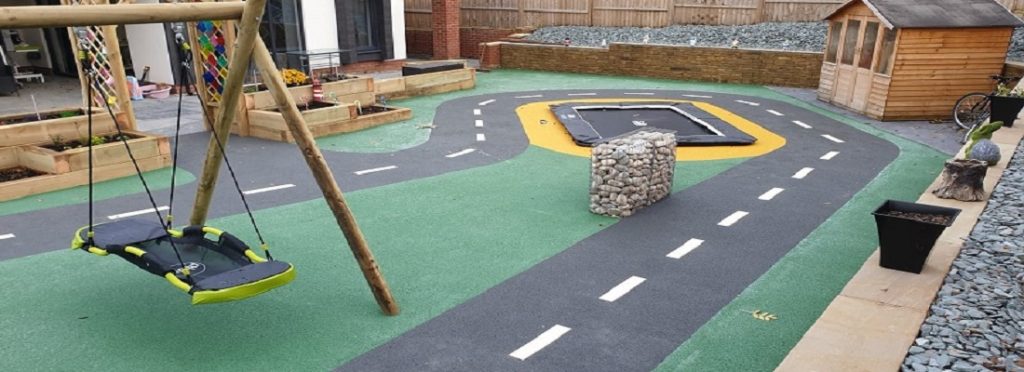
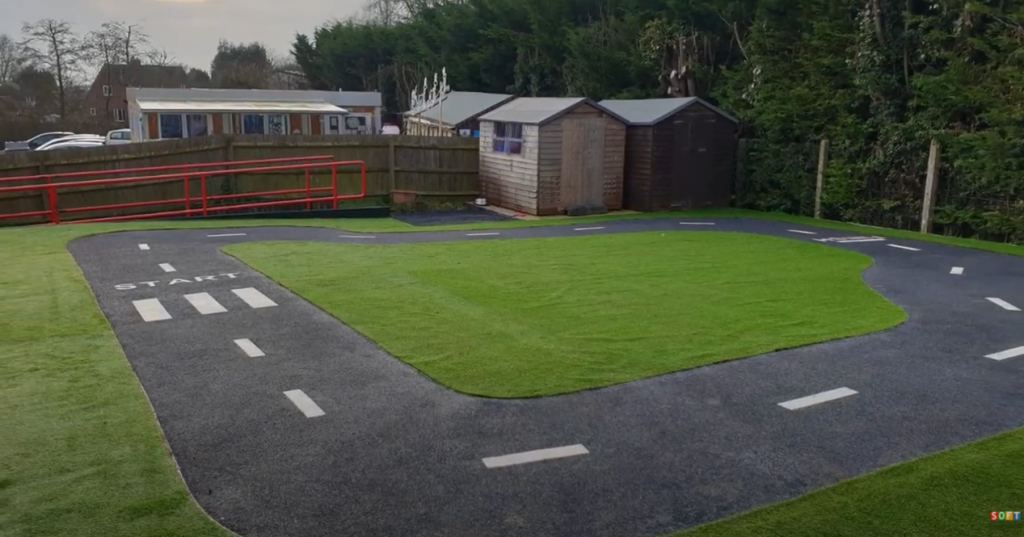 Artificial Grass and Wetpour Roadway Construction in Liverpool
 Benefits of a Mud Kitchen for a School Playground
 Benefits of Climbing in Primary School
 Benefits of Sensory Activities for Individuals With Autism
Show all 92 related pages
 Black Wetpour Flooring Construction in Canterbury
 Children’s Play Area Flooring
 Children’s Sensory Playground Designs
 Colourful Play Area Surfacing in Sheffield, South Yorkshire
 Colourful Rubber Playground Flooring Installation in Wakefield
 Colourful UK Playground Surfacing in Bedfordshire
 Cooperative Play Ideas for Kids
 Costs of Schools Playground Safety Surfaces
 Creating a Storytelling Area in Your Playground
 Day Care Playground Safety Flooring in Stoke, Staffordshire
 Den Building Ideas for Schools
 Early Years Outdoor Play
- Educational Playground Surface Installation in Brighton
 Encouraging Risk Taking in Outdoor Play
 EPDM Rubber Play Area Flooring in Luton, Bedfordshire
 EPDM Rubber Play Area Surfacing in Leeds, West Yorkshire
 EPDM Rubber Wetpour Flooring in Newcastle, Tyne and Wear
 Expressive Arts Playground Ideas
 How to Prepare Your Playground for Winter
 How to Refresh Your School Playground
 Imaginative Play Ideas for Kids
 Impact Attenuating Playground Surfacing
 Inclusive Playground Equipment for Schools
 Independent Learning Activities for Kids
 Lap, Leap, Neap Play Area
 Large Wetpour Play Area Surface in Stockport
- Learning Through Play: Psychology and Theories
- Managing Behaviour Through Active Outdoor Play
 Needlepunch Playground Construction in Kilmarnock
 Nursery EPDM Rubber Surfacing in Wolverhampton
 Nursery Play Area Surfacing
 Nursery School Green Wetpour Overlay in Gloucester
- Ofsted Requirements for Outdoor Play
- Outdoor Maths Games for Children
 Outdoor Nursery School Surfacing in Preston
- Outdoor Play Area Ideas for Kids
 Outdoor Play Ideas for Children With Dyscalculia
 Outdoor Playground Roadway Design
 Outdoor Wetpour Surfacing Install in Leicester
 Play Area Line Marking Specification
 Play Area Maintenance
 Playground Activities for the National Curriculum
- Playground Designs for Sensory Processing Disorder
 Playground Equipment for Schools
- Playground Fencing
- Playground Flooring Repair in Birmingham, West Midlands
 Playground Games for Children With Dyspraxia
 Playground Games to Encourage Speech Development
 Playground Grass Mats Safer Flooring
 Playground Safety Surface Construction in Reading, Berkshire
 Playground Safety Surfacing with Graphics in Shropshire
 Playground Surfacing Options
 Playground Wet Pour Flooring in Northamptonshire
 Playground Wet Pour Flooring in Nottinghamshire
- Playground Wet Pour Flooring in Oxfordshire
- Poured in Place Rubber Bouncy Playground Surfaces
 Pre-School Play Area Surfacing in Wigan
 Primary School Outdoor Classroom Funding Grants
 PS4 Activity Games Space Area in Penrith
 Q26: Wetpour Playground Safety Surfacing
 Rubber Playground and Artificial Grass Surfacing in Middlesbrough
 Rubber Spheres Play Equipment
 Rubber Tarmac Flooring
 Sand and Water Play Activities for Kids
- School Adventure Trail Designs
 School All Weather MUGA Pitches
 School Athletics Track Designs
- School Playground Design and Install in Manchester
- School Playground Groundworks
- School Playground Ideas
 School Playground Marking Designs
- School Playground Surfacing
 Schools Recreational Long Jump Runway Length
 Spongy Nursery School Surfacing in Carlisle
 Spongy Playground Flooring Construction in Woking, Surrey
 Tests for Playground Safety Flooring
- Top 3 Safety Surfaces for Playgrounds
- Top 5 School Playground Trends
 Wet Pour Surfacing and Synthetic Turf Construction in Worthing, Sussex
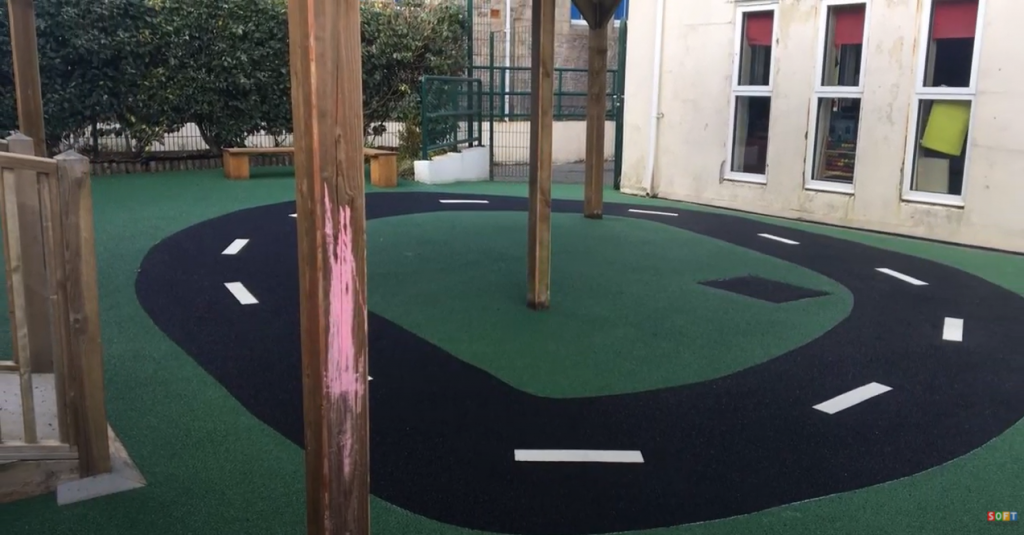 Wetpour Flooring & Graphics Installation in Bristol
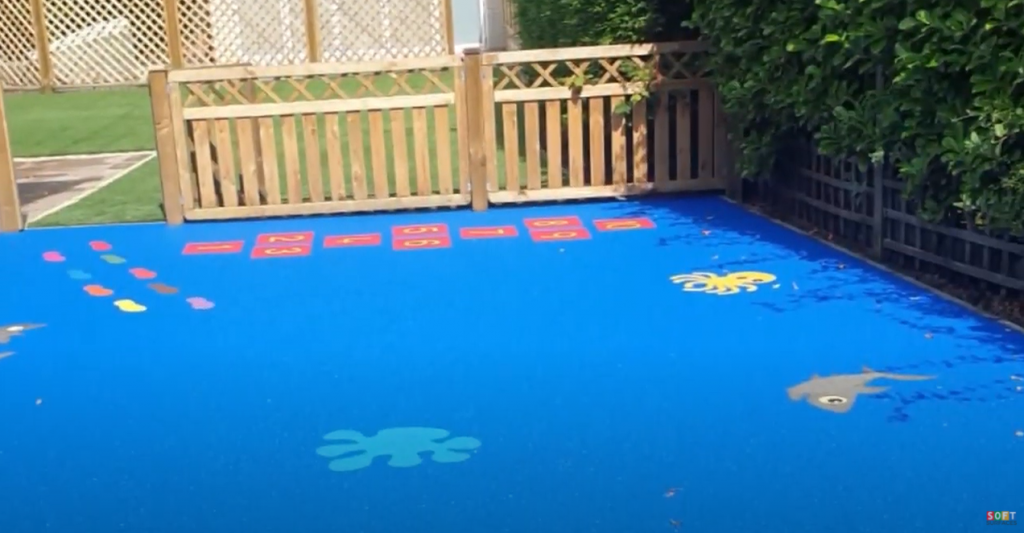 Wetpour Playground with Graphics in Salford, Greater Manchester
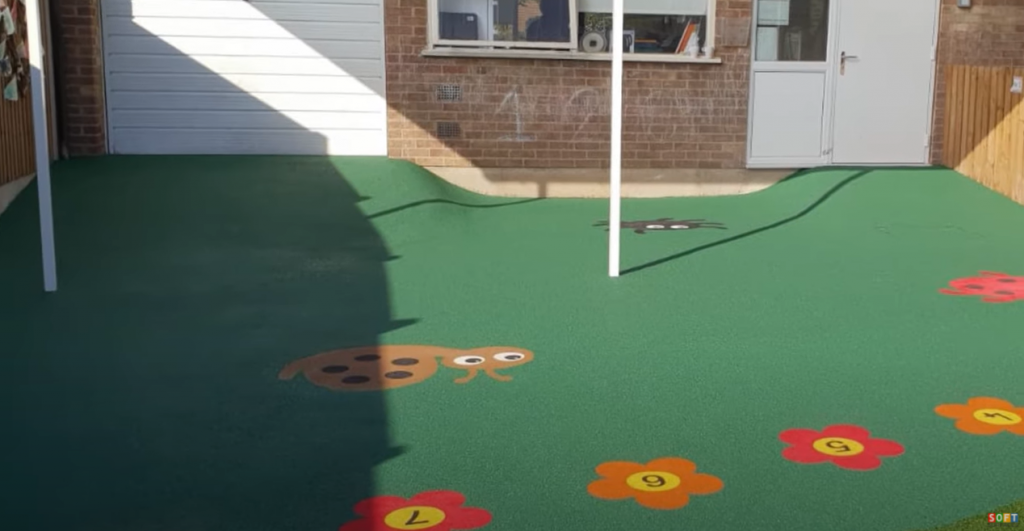 Wetpour Safety Flooring with Graphics at a Nursery in Cheltenham, Gloucestershire
- What Is Critical Fall Height?
A final recommendation which I think is incredibly relevant and fun is a scavenger hunt. Before starting, start hiding items around the garden. It’s up to you what you hide, you could make it educational and hide numbers around the garden and give your class maths problems to solve and for them to go find the answers. Once you have chosen the items to hide, gather the class and let them go on a hunt! Group work or individual work can be promoted through this activity, its all up to you.